Little Thoughts, Big Feelings: Helping Children Understand the Connection
Have you ever noticed how two children can experience the exact same situation but react in completely different ways?
One child spills a glass of water and bursts into tears. Another shrugs, grabs a towel, and starts cleaning up.
Same situation. Different reactions.
Why?
While many factors influence how children respond, one important piece of the puzzle is what they are thinking and feeling in that moment.
At Believe II Be™, we believe that helping children recognize the connection between their thoughts, feelings, and actions is a meaningful step toward building self-awareness, confidence, and healthy habits.
And the beautiful thing is, these conversations can begin much earlier than we might think.
It All Begins With Awareness
Children experience a wide range of emotions every day.
Excitement when they accomplish something new. Frustration when a toy doesn’t work. Disappointment when plans change. Pride when they finally master a difficult skill.
All of these feelings are part of growing up.
But young children don’t always have the words to explain what’s happening inside.
That’s where we come in.
When we help children identify their feelings, we’re giving them something powerful: the ability to begin understanding their own experiences.
Instead of immediately saying, “Don’t be upset,” we might ask:
“Can you tell me what you’re feeling right now?”
Or simply:
“That looks frustrating. Do you want to talk about it?”
Sometimes, the most important first step isn’t changing a feeling. It’s recognizing and accepting that the feeling is there.
Thoughts, Feelings, and Actions: How They Connect
Imagine a child building a tower of blocks.
Just as the tower is almost finished, it tumbles to the ground.
The child might think:
“I can’t do anything right!”
That thought could make the disappointment feel even bigger, leading to tears or a decision to give up.
But what if, with a little encouragement, the child begins to consider another thought?
“That was hard, but maybe I can try again.”
The disappointment might not disappear immediately. And that’s okay.
But this new perspective may help the child feel more hopeful and willing to rebuild.
This is one way thoughts, feelings, and actions can influence one another.
What we think can affect how we feel. How we feel can influence what we do. And what we do can shape what happens next.
The connection isn’t always simple or predictable. Emotions are also influenced by our bodies, relationships, environments, and experiences.
Still, helping children notice their inner dialogue gives them another tool for navigating everyday challenges.
The Power of One Small Pause
One of the simplest habits we can encourage is learning to pause before reacting.
For young children, this takes practice, patience, and plenty of support.
A pause might look like taking a slow breath, counting to three, asking for help, or stepping away from a frustrating situation.
It doesn’t have to be complicated.
We can gently introduce three questions:
1. What am I feeling?
“I’m frustrated because my tower fell.”
2. What am I thinking?
“I think I’ll never be able to build it.”
3. What could I try next?
“I could ask for help or start again.”
These questions aren’t about forcing a positive attitude or expecting children to manage every emotion independently.
They’re about creating space for awareness, understanding, and choice.
Over time, these little pauses can become familiar tools children turn to when emotions feel overwhelming.
Why Small Habits Matter
We often think of habits as routines like brushing our teeth, putting away toys, or getting ready for bed.
But habits can also include the ways we respond to challenges.
Do we immediately give up when something is difficult?
Do we ask for help?
Do we practice speaking kindly to ourselves?
Just as physical routines become more familiar through repetition, emotional and behavioral skills can grow through practice.
A child who learns to say, “I can try again,” may gradually become more comfortable approaching challenges.
A child who practices naming feelings may find it easier to communicate what they need.
And a child who sees adults model patience and kindness begins to understand what those behaviors look like in everyday life.
Small moments of practice can create meaningful opportunities for growth.
Five Simple Ways to Encourage Emotional Awareness at Home
You don’t need a special curriculum or an elaborate activity to begin these conversations.
Often, the most meaningful learning happens in ordinary moments.
1. Name feelings together.
Use everyday experiences to introduce words like excited, disappointed, nervous, proud, frustrated, and hopeful.
2. Make room for every emotion.
Let children know that sadness, anger, and frustration are normal feelings. The goal isn’t to eliminate difficult emotions, but to learn healthy ways to express and respond to them.
3. Notice your own words.
Children learn by watching us. Saying, “I’m frustrated, so I’m going to take a breath before I try again,” models a useful response.
4. Celebrate effort, not just outcomes.
Instead of focusing only on success, acknowledge persistence, curiosity, and the willingness to try.
5. Use stories to start conversations.
Books give children opportunities to explore feelings and choices through characters they recognize and love.
You might ask, “How do you think that character feels?” or “What would you do in that situation?”
There’s no need for a perfect answer. The conversation itself is valuable.
A Little Reminder for Grown-Ups, Too
As adults, we know that managing emotions isn’t always easy.
Some days, even we need a moment to pause, rethink a situation, or start again.
That’s why we believe these lessons are so meaningful.
We’re not teaching children to be happy all the time.
We’re helping them discover that their feelings matter, their thoughts deserve attention, and they can gradually learn new ways to respond to life’s challenges.
And perhaps, along the way, we’ll remember to practice those same lessons ourselves.
At Believe II Be™, this belief is at the heart of the stories we create.
Because when children begin understanding their inner world, they gain tools that can support them as they grow.
One thought. One feeling. One small choice at a time.
What You Believe, You Become.
With love and belief,
Heidi & Marla
Co-Founders, Believe II Be™
Continue the Conversation With Skylar & Mr. Habits
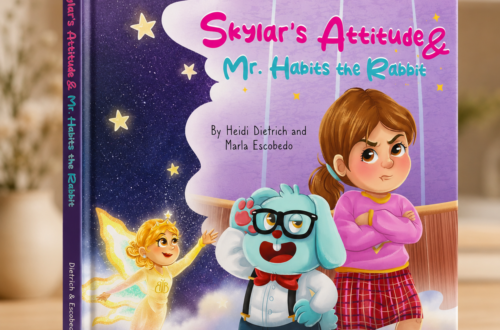
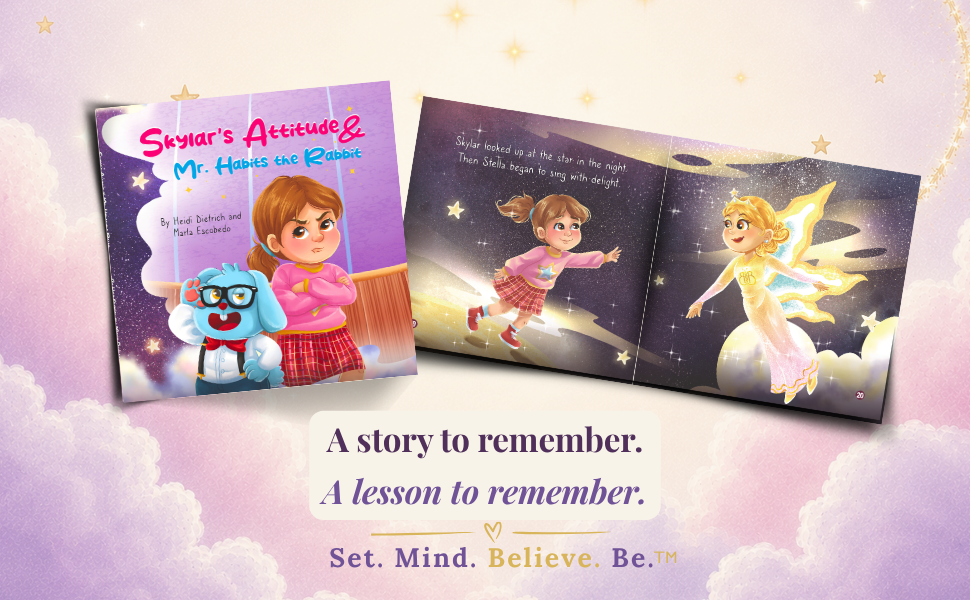
In our first children’s book, Skylar’s Attitude & Mr. Habits the Rabbit, young readers meet a little girl learning about her emotions, her attitude, and the choices she makes.
Through storytelling, friendship, and a little bit of magic, we invite families to explore these important ideas together.
Set. Mind. Believe. Be.™